Bhojpuri Cinema: How India’s Largest Regional Audience Sustains Its Film Industry
By speaker numbers, Bhojpuri is among India’s largest languages — tens of crores across Bihar, eastern Uttar Pradesh, Jharkhand and a vast migrant diaspora. Yet Bhojpuri cinema operates on budgets that Bollywood would consider rounding errors, in theatres concentrated in a specific geographic belt. The industry’s survival is a study in doing more with less: serving a huge audience with minimal resources, powered by stars, music and an unmatched understanding of its viewers.
The audience: scale without spending power
Bhojpuri cinema’s defining paradox is demographic: enormous audience, limited purchasing power. Its core viewers — in Bihar, eastern UP and among migrant workers across India — are among the country’s most price-sensitive moviegoers. Ticket prices must stay low, which caps per-film revenue, which caps budgets. The industry adapted by making films cheaply and prolifically: low costs, fast shoots, and volume as strategy.
The migrant audience is crucial. Bhojpuri-speaking workers in Delhi, Mumbai, Punjab and Gujarat form a dispersed but loyal viewership, served by theatres in industrial belts and, increasingly, by YouTube and streaming. For migrants, Bhojpuri films are a connection to home — a cultural lifeline that transcends the films’ modest production values.
The star system on a budget
Bhojpuri cinema runs on stars with fan followings that belie the industry’s size. Its leading men are genuine mass heroes in their belt, drawing opening crowds that rival much bigger industries’ stars in intensity if not in revenue. Star-driven action films, comedies and family dramas follow proven formulas, and the music — catchy, earthy, endlessly danceable — often outlives the films, dominating the region’s weddings and festivals.
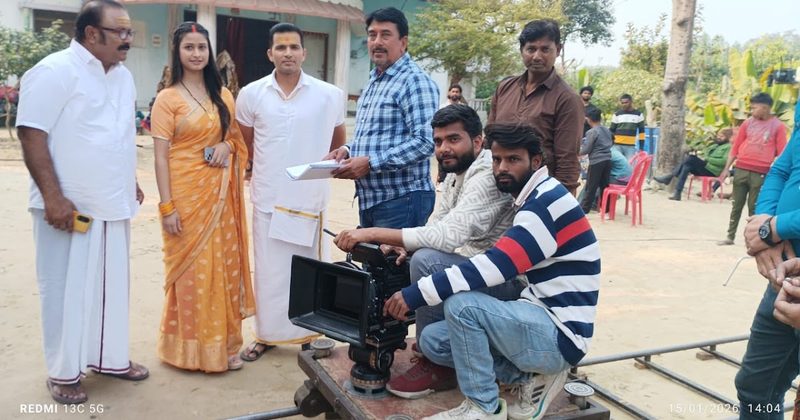
Production is ruthlessly efficient. Films shoot in weeks, not months; locations are real rather than built; crews are lean; and the industry’s technicians are masters of achieving maximum screen impact per rupee. This frugality is not a choice but a discipline imposed by the revenue ceiling — and it has made Bhojpuri producers among Indian cinema’s shrewdest budget managers.
The survival formula:
- Ultra-low budgets: films made for fractions of mainstream costs, recoverable from the core belt.
- Star vehicles: mass heroes guaranteeing openings in the Bhojpuri heartland.
- Music-driven: hit songs extending films’ cultural and commercial life.
- Migrant reach: serving dispersed Bhojpuri audiences in metros and industrial towns.
- Digital afterlife: YouTube and streaming giving old films perpetual audiences.
Quality, criticism and evolution
Bhojpuri cinema faces persistent criticism — for formulaic storytelling, regressive content and technical roughness — some of it fair, some of it class prejudice against its audience. The industry’s defenders note that it serves viewers whom mainstream Indian cinema largely ignores, in their language, at prices they can afford, with stars they adore. Dismissing it misses its social function: for crores of Indians, Bhojpuri films are the cinema.
Evolution is underway. A new generation of filmmakers is attempting content-driven Bhojpuri cinema — realistic dramas, festival selections, streaming originals — aiming to expand what the industry can be. Digital platforms have lowered the barriers: a Bhojpuri film no longer needs a theatrical belt to find viewers. Whether this new wave can coexist with the star-driven mainstream will shape the industry’s next decade.
The economics of the belt
The Bhojpuri theatrical market is geographically concentrated — Bihar, eastern UP, Jharkhand and migrant pockets — which makes distribution straightforward but caps upside. Satellite rights to regional channels and, increasingly, digital rights provide crucial supplementary revenue. YouTube has been transformative: Bhojpuri songs and films draw hundreds of millions of views, creating advertising revenue streams that did not exist a decade ago and giving the industry a global shop window.
FAQs
How big is the Bhojpuri audience? Bhojpuri speakers number in the tens of crores across Bihar, eastern UP, Jharkhand and migrant communities nationwide — one of India’s largest language audiences.
Why are Bhojpuri films so cheap to make? Low ticket prices in the core market cap recoverable revenue, forcing ultra-efficient production — fast shoots, lean crews and modest star fees by national standards.
Is Bhojpuri cinema changing? Yes — new filmmakers are making realistic, festival-oriented films and streaming originals, though the star-driven commercial mainstream still dominates.
Bhojpuri cinema is Indian film’s great populist: dismissed by elites, adored by its audience, surviving on wits and volume where others would need wealth. It serves the viewers the rest of the industry forgot — and that, in the end, is a kind of greatness.
Compiled by the Khabar 24h Editorial Desk from publicly available sources.

Khabar 24h Editorial Desk — our explainers are prepared by the Khabar 24h editorial team using AI-assisted research tools, and every piece is reviewed by a human editor before publishing. We do not claim original reporting: our work is turning complex topics into simple, accurate summaries. Spotted an error? Write to contact@khabar24h.com — our corrections policy aims for same-day review.
More from this author →