Research Careers at IISc and IITs: From BSc to Scientist
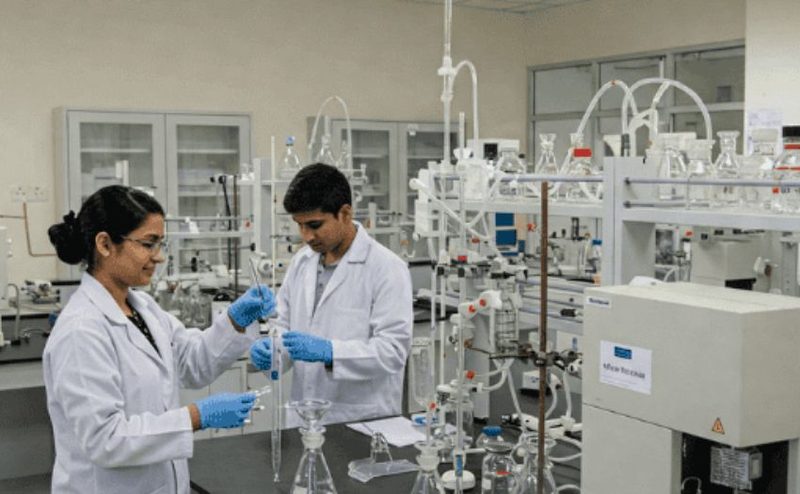
For the scientifically inclined, no Indian addresses carry more magic than IISc Bangalore and the IITs. Research careers at IISc and IITs represent the pinnacle of Indian science: world-class labs, brilliant peers, and the chance to work on problems — quantum computing, space systems, AI, biotechnology — that shape the century. But the path from a BSc classroom to a scientist’s position is long, competitive and poorly mapped for most students. This guide traces it stage by stage.
Entry routes: getting into the ecosystem
Undergraduate entry runs through JEE Advanced (IITs) and the IISc/IISER aptitude tests (IAT) for BS programmes — the most common launchpad. Post-BSc, the routes multiply: JAM for IIT MSc programmes, GATE for MTech and direct PhD, CSIR-UGC NET JRF for PhD fellowships, and institute-specific interviews. IISc’s integrated PhD after BSc is a prized direct route into research. KVPY’s discontinuation has shifted talent identification toward olympiads and the new INSPIRE-MANAK frameworks, but the principle holds: demonstrated scientific aptitude, through exams or olympiad medals, opens these doors. Apply broadly across institutes — each has distinct research strengths.
The training ladder: BS to PhD to postdoc
The standard trajectory: a 4-year BS or BTech with research exposure, then a PhD (4-6 years) producing original contributions and publications, then 1-2 postdoctoral stints — increasingly abroad — building independence. IISc and older IITs offer superb doctoral training: strong coursework, seminar cultures, and supervisors connected to global science. Fellowships (PMRF, institute assistantships, CSIR-JRF) fund the journey. The postdoc stage, once optional in India, is now near-mandatory for faculty positions — plan for it as part of the career, not a detour. Each rung filters by research output and, increasingly, by the ability to win grants and collaborate.
What a scientist’s life actually looks like
- Faculty at IISc/IITs: split between teaching, supervising PhD students, writing grants, publishing and institutional service — intellectually rich, administratively heavy.
- Government lab scientists (ISRO, DRDO, CSIR): mission-driven research with excellent facilities and job security, somewhat less academic freedom.
- Industry R&D: the fastest-growing destination — semiconductor, pharma, AI and automotive labs pay the best and move fastest.
- Scientific administration and policy: DST, DBT and think tanks need research-trained minds for funding and strategy roles.
Common to all: the currency is original ideas executed rigorously, communicated clearly.
Fellowships and funding that power careers
Early careers run on fellowships: INSPIRE Faculty awards, Ramanujan Fellowships, DST start-up grants and institute seed funding launch independent research. The SERB (now ANRF) grant system funds projects across disciplines — learning grant-writing is as career-critical as lab skill. International fellowships (Humboldt, Marie Curie, Fulbright-Nehru) enable formative years abroad. Indian science funding has grown steadily, and young investigators today command resources previous generations could not imagine — though competition for grants remains fierce and proposal-writing is a skill to develop deliberately.
Building the profile from undergraduate years
Start research early: summer fellowships (IASc, IIT summer programmes), semester projects with professors, and olympiad or competition participation. Publish if the work merits it — even a conference paper as an undergraduate signals seriousness. Develop computational skills regardless of discipline; modern science runs on data and simulation. Cultivate mentors: a professor who knows your work writes the recommendation that opens PhD doors. And read broadly — the best researchers connect ideas across fields, and India’s interdisciplinary centres reward exactly that.
FAQs
Do I need to go abroad?
Not mandatory, but a foreign postdoc significantly strengthens faculty applications at top institutes. Many successful scientists build entire careers in India.
What salaries do scientists earn?
IIT/IISc assistant professors start around 1-1.5 lakh rupees monthly plus housing and research support; government lab scientists follow pay commissions; industry R&D pays substantially more.
Is the competition manageable?
It is intense but meritocratic: sustained research output, good mentorship and strategic fellowship applications carry most determined candidates through.
Research careers at IISc and IITs demand a decade of training and reward it with work that matters — discovering, inventing, mentoring the next generation. For the student who finds textbooks insufficient and questions irresistible, no path in India offers more. Begin building research taste as an undergraduate: read papers beyond your syllabus, question results in lab courses, and seek mentors who treat your curiosity seriously.
Source: Indian Institute of Science

Khabar 24h Editorial Desk — our explainers are prepared by the Khabar 24h editorial team using AI-assisted research tools, and every piece is reviewed by a human editor before publishing. We do not claim original reporting: our work is turning complex topics into simple, accurate summaries. Spotted an error? Write to contact@khabar24h.com — our corrections policy aims for same-day review.
More from this author →