RTE Admissions: How the 25 Percent EWS Quota Works in Private Schools
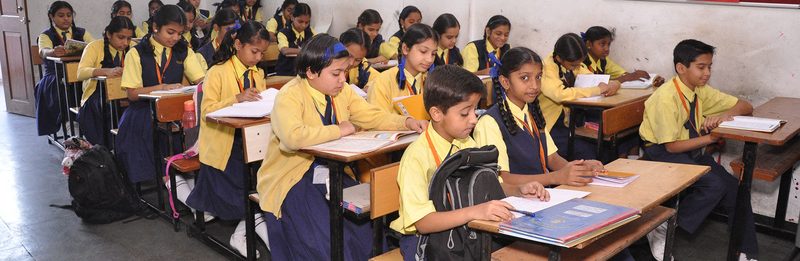
Every year, lakhs of parents from economically weaker sections win something close to a lottery: a free seat in a private school that would otherwise cost more than their annual income. RTE admissions under Section 12(1)(c) of the Right to Education Act require all private unaided schools to reserve 25 per cent of entry-level seats for children from disadvantaged groups and weaker sections, with the government reimbursing the school. Implementation is messy — awareness is low, documentation trips up applicants, and some schools resist — but for eligible families, it is the single most powerful educational opportunity available. This guide explains exactly how the quota works and how to claim it.
The legal framework
The RTE Act, 2009 made free and compulsory education a fundamental right for ages 6-14. Section 12(1)(c) extends this into private schools: 25 per cent of seats in Class 1 (or pre-school, where applicable) must go to children from disadvantaged groups — SC, ST, socially and educationally backward classes — and weaker sections, defined by state-notified income ceilings, typically 1-2.5 lakh rupees of annual family income depending on the state. Schools cannot charge these children any fee — no tuition, no admission fee, no charges for books or uniforms — and cannot screen them through tests or interviews. State governments reimburse schools at per-child rates, though delayed reimbursements are a chronic friction point.
Who is eligible
Eligibility has two limbs: the child must belong to a disadvantaged group or a weaker section as defined by the state, and must meet age criteria — typically 5-7 years for Class 1 admission, varying by state. Required documents usually include the child’s birth certificate, caste certificate where applicable, income certificate or BPL card, and residence proof. Orphans, children with disabilities, and children of certain occupational categories get priority in several states. Crucially, eligibility is determined by the family’s status, not by prior schooling — a child already in a government school can apply.
How to apply: the step-by-step process
- Watch for the state education department’s admission notification, usually December to February, on its website and in local newspapers.
- Apply online on the state RTE portal, listing preferred schools in order — most states allow multiple choices.
- Upload or prepare documents: birth, caste, income and residence proofs as specified.
- If applications exceed seats, allotment is by lottery — a transparent draw, often computerised and publicly viewable.
- On allotment, report to the school with documents for verification within the deadline; the school must admit the child.
- If a school refuses or demands money, complain to the district education officer — such refusal is illegal.
Common problems and how to handle them
Document gaps sink many applications: get income and caste certificates made months before the admission season, not during it. Some schools subtly discourage RTE parents — separate queues, delayed book distribution, pressure to pay for extras; know that any fee demand is illegal and reportable. Allotment to a distant school creates transport problems states have not solved; choose preferences realistically. After admission, stay engaged: attend parent meetings, track your child’s progress, and do not let the school treat RTE children as second-class. NGOs in many cities run helplines guiding parents through the process free of charge.
Does it work? The evidence
Studies show the quota has put lakhs of disadvantaged children into private schools they could never have afforded, with measurable learning gains in several evaluations. But fill rates lag — many states fill only a fraction of the 25 per cent due to low awareness and procedural hurdles. Learning outcomes for RTE children vary: those who get remedial support thrive, while those thrown into English-medium classrooms without bridging struggle. The policy’s promise is real but its delivery needs the two things government schemes always need: awareness among beneficiaries and accountability in implementation.
FAQs
Is education completely free under the RTE quota?
Yes. Schools cannot charge tuition, admission fees or any other fee, including for books and uniforms, for RTE-quota children.
What income qualifies as weaker section?
It varies by state, generally 1 to 2.5 lakh rupees annual family income. Check your state education department’s notification.
Can schools test or interview RTE applicants?
No. Screening of any kind is prohibited; where demand exceeds seats, admission is by lottery.
The 25 per cent EWS quota is a remarkable promise — that a child’s school should not be decided by parents’ income. Claiming it requires paperwork, persistence and awareness of your rights. If you are eligible, apply every year you qualify; if you know someone eligible, tell them. The quota only works when families know it exists.
Source: Ministry of Education, Government of India

Khabar 24h Editorial Desk — our explainers are prepared by the Khabar 24h editorial team using AI-assisted research tools, and every piece is reviewed by a human editor before publishing. We do not claim original reporting: our work is turning complex topics into simple, accurate summaries. Spotted an error? Write to contact@khabar24h.com — our corrections policy aims for same-day review.
More from this author →