Study in Singapore: NUS and NTU Admissions, Tuition Grants and Costs
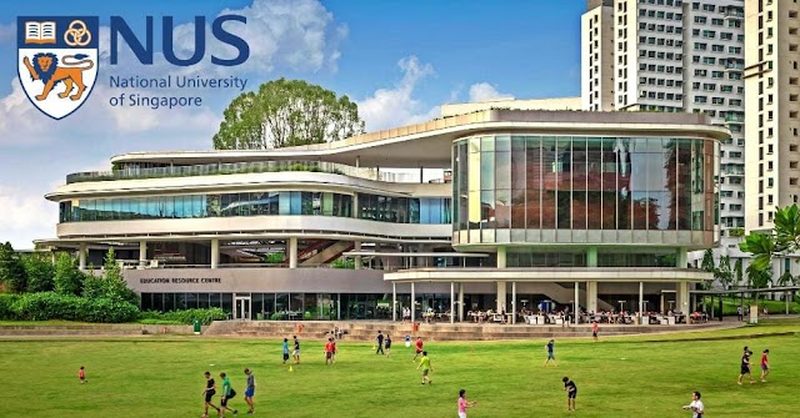
Singapore is the closest thing Asia has to a perfect study-abroad package: two universities ranked among the top 20 in the world, courses taught in English, a four-hour flight from India, and a government that actively subsidises international students’ tuition. Study in Singapore centres on the National University of Singapore (NUS) and Nanyang Technological University (NTU), both of which outrank most American and British universities their Indian applicants also consider. The catch is selectivity — admission is brutally competitive — and a unique funding deal, the MOE Tuition Grant, that trades subsidised fees for a three-year work commitment after graduation.
NUS and NTU: what makes them special
NUS and NTU consistently rank in the global top 20, ahead of household names like Yale, Princeton and the University of Edinburgh in several league tables. NUS is strongest in computer science, engineering, business and law; NTU leads in engineering, materials science and artificial intelligence research. Both run on a rigorous, research-driven model with heavy industry linkage — Singapore’s status as Asia’s finance and tech hub means internships at banks, consultancies and tech firms are woven into the degree. Beyond the big two, Singapore Management University (SMU) is excellent for business, finance and law, and the Singapore University of Technology and Design (SUTD), built with MIT, is a niche pick for design-centric engineering.
Admissions: what it takes to get in
For Indian applicants, NUS and NTU expect outstanding Class 12 results — typically 95 per cent and above in relevant subjects for competitive courses, though cut-offs vary by programme. English proficiency through IELTS or TOEFL is required, and some courses ask for additional tests or interviews. Applications open around October and close between February and March for the August intake. The universities assess holistically: olympiads, research projects, leadership and national-level achievements genuinely help at the margin. Because both universities also reserve the bulk of seats for Singapore citizens and permanent residents, international acceptance rates for popular courses like computer science can fall into the single digits.
The MOE Tuition Grant: subsidised fees, three-year bond
This is Singapore’s signature deal. International students can take the Ministry of Education Tuition Grant, which cuts annual tuition roughly in half — from about 30,000-40,000 Singapore dollars to around 17,000-22,000 SGD for most undergraduate programmes. In return, graduates must work in Singapore for three years after completing their degree, for any employer, in any role. It is not bonded labour with a single company; it is a commitment to contribute to the Singapore economy. Breaking the bond means repaying the subsidy with interest. For students who want to build a career in Asia’s financial capital anyway, it is free money. For those determined to move to the US or Europe immediately after graduating, it is a real constraint to weigh.
Real costs beyond tuition
Even with the grant, Singapore is not cheap. University hostel accommodation costs 400 to 900 SGD a month, and most students spend 1,200 to 1,800 SGD a month all-in on food, transport and living. A year at NUS or NTU with the tuition grant typically totals 30,000 to 40,000 SGD. Without the grant, add roughly 15,000 SGD. Scholarships exist — the ASEAN Undergraduate Scholarship and university-level merit awards can cover tuition fully — but they are as competitive as admission itself. The good news: part-time work is allowed (up to 16 hours a week during term), and paid internships in finance and tech pay well.
Careers after graduation
Singapore’s graduate employment surveys consistently show employment rates above 90 per cent within six months, with median starting salaries around 4,000-5,000 SGD a month for NUS and NTU graduates, higher in tech and finance. The three-year bond period often converts into long-term employment passes, and Singapore’s permanent residence system favours graduates of local institutions. For Indian students, the city offers something no Western destination can: a career in global finance and technology while staying a short flight from home, in a country where the Indian community is established and visible.
FAQs
Do I have to take the tuition grant?
No, it is optional. You can pay full international fees and leave Singapore freely after graduation. But most Indian students take it because it nearly halves the cost.
Can I get PR in Singapore after studying?
Graduates working in Singapore can apply for permanent residence, and local graduates are viewed favourably. There is no automatic PR, but the pathway is well-trodden.
Is Singapore safe for Indian students?
Yes. Singapore is consistently ranked among the world’s safest cities, with low crime, excellent public transport and a large, integrated Indian community.
Singapore demands excellence at the entry gate and rewards it generously afterwards: world-class education at a subsidised price, in the heart of Asia’s economy, with a clear runway into high-paying careers. If your grades are stellar and you are open to building your early career in Asia, few destinations compete.
Source: Ministry of Education, Singapore

Khabar 24h Editorial Desk — our explainers are prepared by the Khabar 24h editorial team using AI-assisted research tools, and every piece is reviewed by a human editor before publishing. We do not claim original reporting: our work is turning complex topics into simple, accurate summaries. Spotted an error? Write to contact@khabar24h.com — our corrections policy aims for same-day review.
More from this author →