Digital Detox for Students: Managing Screen Time During Exam Season
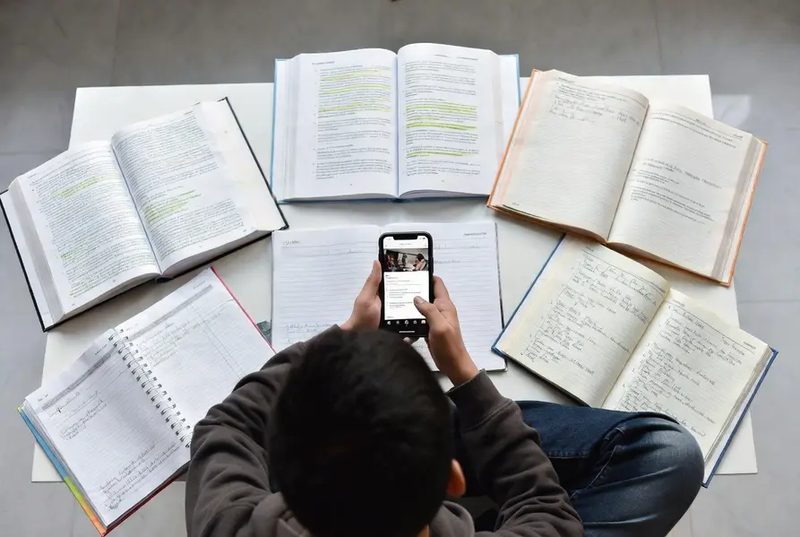
The phone is the most sophisticated distraction machine ever built, and it lives in the pocket of every exam aspirant. Studies suggest students check their phones 100-150 times a day, and each check fragments attention for far longer than the check itself lasted. During exam season, this is not a lifestyle issue — it is a marks issue. But the answer is not throwing the phone away; it is a deliberate digital-detox system that reclaims attention while keeping the phone’s genuine utilities. Here is the practical plan.
The true cost: what the phone steals
The damage is worse than the screen-time number suggests. First, the direct loss: 3-5 hours daily of scrolling, reels and messaging. Second, the attention residue: after checking a notification, the brain keeps processing it for 15-25 minutes, degrading the study that follows. Third, the comparison tax: topper reels, rank predictions and peer achievements spike anxiety, which further damages focus. Fourth, sleep: late-night scrolling delays sleep onset and degrades its quality, and tired brains are distractible brains. Add it up and the phone can easily cost the equivalent of a full study subject.
The app audit: keep, limit, delete
Go through every app and sort into three buckets. Keep: genuine utilities (banking, maps, authentic study apps, essential messaging). Limit: social media and entertainment — these stay but behind barriers. Delete: the pure time-sinks you installed on impulse, especially short-video apps during exam season. For the limit bucket, apply friction: log out after every use (the login screen breaks the reflex loop), turn off all non-essential notifications, move apps off the home screen into a buried folder, and set daily timers. Deleting is easier than resisting — willpower is weakest exactly when the phone is closest.
The focus-mode system for study hours
- Physical separation: during study blocks, the phone stays in another room — not face-down on the desk. Out of sight measurably improves focus even when the phone is off.
- Scheduled check-ins: two or three fixed windows daily (say, lunch and evening) for messages and updates — batching beats grazing.
- Focus/DND modes: automate Do Not Disturb during study hours; allow calls only from family.
- Grayscale trick: switching the display to grayscale makes apps dramatically less appealing.
- Study-with-phone rules: if you must keep it nearby (for OTPs or timers), use a basic alarm clock instead and keep the phone switched off.
Reclaiming the in-between moments
The phone colonises micro-moments: queues, commutes, waiting rooms, the minutes before sleep. Reclaim them deliberately: carry a book or flashcards for commutes, use waiting time for mental revision (recalling today’s formulae), and make the bedroom a no-phone zone with a physical alarm clock. Boredom, paradoxically, is productive — the mind consolidates learning in idle moments, and every reflex-scroll kills that consolidation. The first week of reclaimed boredom feels strange; by the third, students report thinking more clearly.
The social challenge: FOMO and peer pressure
The hardest part is social: group chats, memes, the fear of missing out. Be upfront — tell friends you are on a detox schedule and will reply in your windows; true friends adapt. Mute the noisiest groups instead of leaving them. Replace social scrolling with scheduled real contact: a weekly call or outing satisfies the social need without the drip-feed distraction. And remember the reframe: everyone else’s highlight reel is not your competition — your only competition is yesterday’s version of your preparation.
The 7-day detox challenge
Start with a structured week. Day 1: audit screen time and list your top 3 time-sink apps. Day 2: delete one, set limits on the others, turn off non-essential notifications. Day 3: move the phone out of the study room and set two daily check-in windows. Day 4: switch to grayscale and log out of social apps after each use. Day 5: reclaim one micro-moment (commute reading or pre-sleep wind-down without the phone). Day 6: tell friends your schedule and mute the noisiest group. Day 7: review the week — most students recover 2+ hours daily and report calmer, deeper study. Repeat the challenge monthly through exam season; each round tightens the system further.
FAQs
Should I switch to a basic phone? It works brilliantly for some, but most students need smartphone utilities. Try the friction system first; go basic only if you keep relapsing.
What about study YouTube channels? Keep them, but watch on a laptop with a watchlist — never on the phone, where one educational video leads to ten entertainment ones.
How long does the detox take to feel normal? The acute restlessness fades in 3-5 days; the new habits feel natural within three weeks.
You do not need less technology — you need more intention. Audit the apps, separate the phone from study, batch the check-ins, and take back the hours that were always yours.
Compiled by the Khabar 24h Editorial Desk from publicly available sources.

Khabar 24h Editorial Desk — our explainers are prepared by the Khabar 24h editorial team using AI-assisted research tools, and every piece is reviewed by a human editor before publishing. We do not claim original reporting: our work is turning complex topics into simple, accurate summaries. Spotted an error? Write to contact@khabar24h.com — our corrections policy aims for same-day review.
More from this author →