Mock Tests for Competitive Exams: How Many to Take and How to Analyse Them
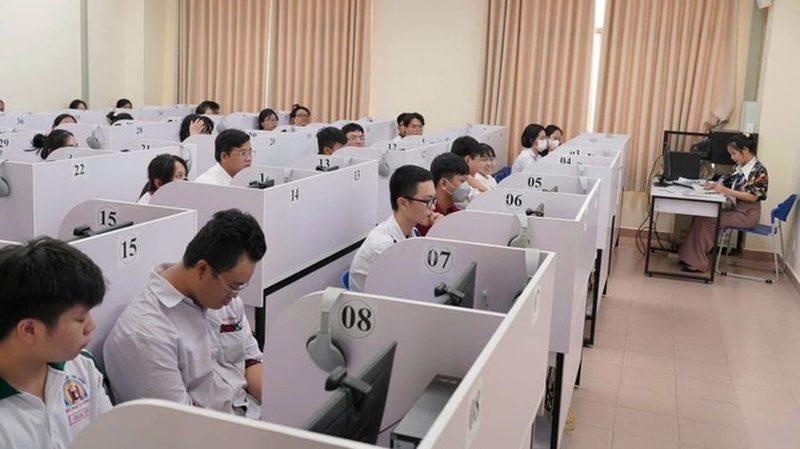
Ask toppers what changed their preparation and most will point to the same thing: not a book, not a teacher, but mock tests. Yet most aspirants misuse them — taking dozens of mocks as a ritual, glancing at the score, and moving on. A mock test is not practice; it is a diagnostic instrument. Taken at the right frequency and analysed ruthlessly, mocks are the single highest-leverage activity in competitive exam preparation. This guide explains how many to take, when to start, and exactly how to analyse them.
How many mocks: the numbers that work
The sweet spot varies by exam. For JEE and NEET, 30-50 full-length mocks across the preparation year is the proven range; for UPSC Prelims, 40-60; for CAT, 25-40; for SSC and banking exams, 50-100 (their mocks are shorter). Fewer than 15 leaves your exam temperament untested; beyond 80, most students hit diminishing returns and burnout. Quality matters more than quantity: one deeply analysed mock beats five skimmed ones. Start mocks early enough that the first ten are allowed to be bad — they are calibration, not verdicts.
When to start and how to schedule
Begin sectional and topic tests as soon as you finish each topic — testing is a learning tool from day one. Start full-length mocks when roughly 60-70 per cent of the syllabus is covered; waiting for 100 per cent means starting too late. Frequency ramps up: one per fortnight initially, weekly in the middle phase, and two per week (with analysis days between) in the final 6-8 weeks. Always take mocks at the actual exam’s time slot — your brain’s alertness is time-trained, and a morning exam needs morning practice. The last mock should be 3-4 days before the real exam, never the day before.
The analysis protocol: where marks are actually made
Analysis should take as long as the mock itself. Work through every question in four buckets:
- Correct and confident: glance and move on — these need no attention.
- Correct but guessed: dangerous — mark these as weak areas, since luck will not repeat.
- Wrong due to concept gap: revisit the theory, make a note, and schedule a revision.
- Wrong due to silly mistake: the most valuable bucket — categorise the error type (misread, calculation, bubbling, time pressure) and track its frequency.
Maintain an error log: date, mock, question, error type, and the fix. Review it before every subsequent mock. Patterns will emerge — and fixing a recurring error type is worth more than learning a new chapter.
Building exam temperament
Mocks train skills no textbook can: question selection (which to attempt, which to skip), time allocation per section, recovery from a bad patch mid-paper, and decision-making under the clock. Develop personal rules through mocks: for instance, two passes over the paper, no question longer than 3 minutes on first pass, and a fixed order of sections. Test these rules across mocks and freeze your strategy 3-4 weeks before the exam — the final phase is for execution, not experimentation. Also practise the unglamorous logistics: OMR bubbling in batches, rough-work organisation, and the washroom-and-water plan.
What good analysis looks like: a worked example
Consider a JEE mock where you scored 180 with 55 attempted. Analysis: 8 errors were misread questions, 5 were calculation slips, 6 were concept gaps in rotation, and 4 were time-pressure guesses. The fixes are specific, not generic — a misreading drill (underline key conditions before solving) for the first bucket, slower calculation with verification for the second, a rotation revision block for the third, and a stricter skip rule for the fourth. Next mock target: cut misreads from 8 to 3. This is what analysis means — not reviewing solutions, but prescribing behavioural fixes and measuring them next time. Students who analyse this way typically gain 20-40 marks over ten mocks without learning a single new chapter.
FAQs
My mock scores are not improving. What should I do? Plateau usually means analysis is shallow. Audit your error log: if the same error types repeat, your analysis is not converting into fixes. Slow down mock frequency and deepen analysis.
Should I take mocks from multiple sources? Yes, but anchor to 1-2 quality sources for trend-tracking; too many sources makes score comparison meaningless.
Are online mocks enough, or do I need offline ones? Match the real exam’s mode. If your exam is computer-based, practise online; if pen-and-paper, practise OMR bubbling offline.
A mock is a mirror — but only analysis turns reflection into improvement. Schedule them, dissect them, log every error, and watch the real exam feel like just another mock.
Compiled by the Khabar 24h Editorial Desk from publicly available sources.

Khabar 24h Editorial Desk — our explainers are prepared by the Khabar 24h editorial team using AI-assisted research tools, and every piece is reviewed by a human editor before publishing. We do not claim original reporting: our work is turning complex topics into simple, accurate summaries. Spotted an error? Write to contact@khabar24h.com — our corrections policy aims for same-day review.
More from this author →