How to Study 10 Hours a Day: Sustainable Timetables for Exam Aspirants
Every exam season, aspirants announce heroic plans: ten, twelve, fourteen hours of daily study. Most collapse within a week. The problem is rarely laziness — it is that they treat study hours like a sprint while the exam demands a marathon. Studying 10 hours a day is genuinely possible, and thousands of toppers do it, but only with a sustainable system built around energy cycles, strategic breaks and recovery. This guide shows you how to build that system.
The maths of 10 hours: where the time comes from
Ten focused hours does not mean ten hours at a desk. It means ten hours of actual cognitive work, which requires roughly 12 hours of scheduled time once breaks are included. A realistic day: 6:30 AM to 10:30 PM with focused blocks of 90-120 minutes separated by 15-30 minute breaks, plus an hour each for meals, exercise and winding down. Sleep is non-negotiable at 7-8 hours — cutting sleep to study more is the fastest way to make all ten hours useless. The students who sustain 10-hour days treat it like athletic training: progressive overload, rest days, and attention to fuel.
Build around energy, not the clock
Cognitive energy follows a curve: most people peak mid-morning, dip after lunch, recover in late afternoon, and get a second wind in the evening. Schedule your hardest work — new concepts, tough problem sets — in peak windows, and relegate revision, flashcards and light reading to the dips. The post-lunch slump is real and physiological; a 20-minute power nap or a walk beats an hour of drowsy page-staring. Track your focus for a week and you will discover your personal curve — then design the timetable around it instead of copying someone else’s.
The block system: a sample timetable
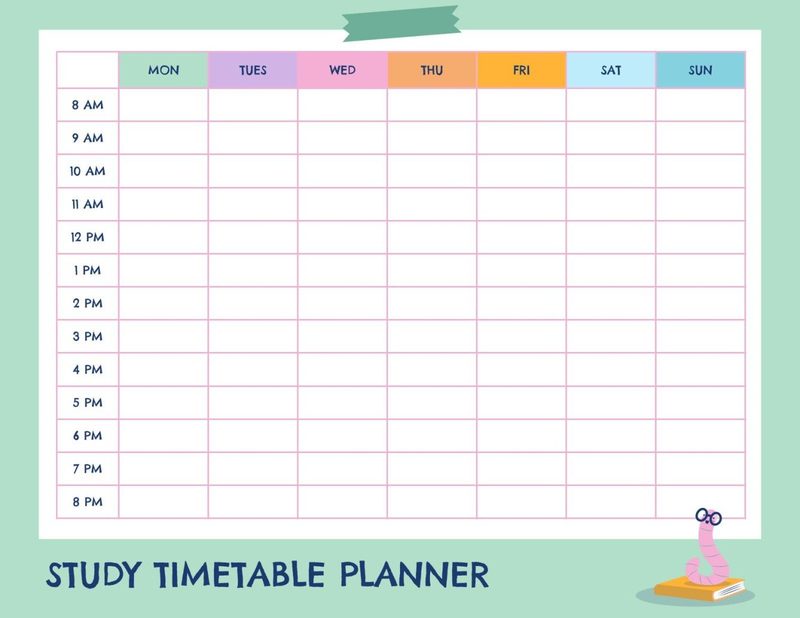
- 6:30-8:00: Block 1 — heavy subject (new concepts), fresh mind.
- 8:30-10:00: Block 2 — problem practice, timed sets.
- 10:30-12:00: Block 3 — second subject, deep work.
- 12:00-2:00: Lunch + rest/power nap — protect this break fiercely.
- 2:00-3:30: Block 4 — lighter revision, flashcards, error-log review.
- 4:00-5:30: Block 5 — mock test or mixed practice.
- 6:00-7:30: Block 6 — third subject or weak-area drills.
- 8:00-9:30: Block 7 — revision of the day’s learning, plan tomorrow.
- 10:30 PM: Wind down; no screens in the last 30 minutes.
Rules that keep it sustainable
First, take one half-day off per week — total rest, no guilt. Burnout is the number-one killer of long preparations, and a weekly break prevents it. Second, protect the transitions: a 5-minute walk between blocks resets attention better than phone scrolling. Third, batch your distractions: check messages only during long breaks, keep the phone in another room during blocks. Fourth, eat and move like an athlete — heavy junk food and zero exercise will collapse your energy within weeks. Fifth, track hours honestly with a simple log; what gets measured gets managed, and the log reveals whether you are actually studying or just sitting.
When 10 hours is the wrong goal
Not everyone needs ten hours. A Class 10 student with school needs 4-5 quality hours; a dropper needs 8-10. More importantly, hours are an input metric — the output metrics are questions solved, mocks improved and concepts mastered. If you are studying 10 hours with falling mock scores and constant fatigue, the system is broken: cut to 7 hours, fix sleep and focus quality, then rebuild. Ten distracted hours lose to six deep ones every time.
FAQs
How long does it take to build up to 10 hours? Three to four weeks of gradual increase — add one hour per week. Jumping from 4 to 10 overnight guarantees a crash.
Should I study at night or morning? Mornings win for most people, but consistency beats chronotype — pick the schedule you can sustain for months.
What if I fall behind the timetable? Never chase lost hours by cutting sleep. Reset the next day; one bad day means nothing, but a broken sleep cycle costs a week.
Ten hours a day is not a test of willpower — it is a test of system design. Build around your energy, protect sleep and breaks, track honestly, and the hours will take care of themselves.
Compiled by the Khabar 24h Editorial Desk from publicly available sources.

Khabar 24h Editorial Desk — our explainers are prepared by the Khabar 24h editorial team using AI-assisted research tools, and every piece is reviewed by a human editor before publishing. We do not claim original reporting: our work is turning complex topics into simple, accurate summaries. Spotted an error? Write to contact@khabar24h.com — our corrections policy aims for same-day review.
More from this author →