How TDS Works: Why Tax Is Deducted Before Your Salary Reaches You
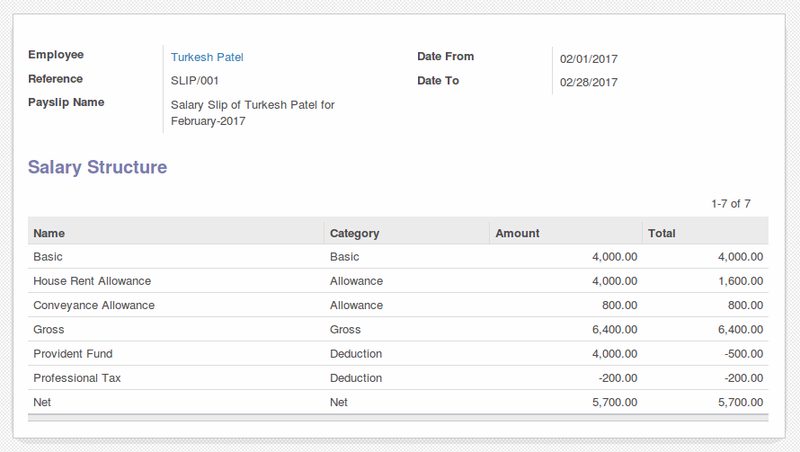
Every salaried Indian has felt the quiet arithmetic of the payslip: a CTC that looks generous, and an in-hand figure reduced by a line called TDS. Tax Deducted at Source is the government’s pay-as-you-earn machinery — instead of waiting for you to pay tax after the year ends, it collects tax at the very point income is paid to you, whether that is salary, interest, rent or professional fees. Understanding how TDS works explains your payslip, prevents double taxation and tells you exactly what to do when too much — or too little — has been deducted.
The core idea: collect tax at the source
The logic is simple and hard to evade. When an employer pays salary, a bank pays interest above the threshold, or a tenant pays rent above 50,000 rupees a month, the payer deducts a prescribed percentage and deposits it with the government against the recipient’s PAN. The recipient gets credit for this deduction in their tax records — visible in Form 26AS and the Annual Information Statement — and adjusts it against their final tax liability when filing the return. If TDS exceeded the actual liability, the excess comes back as a refund; if it fell short, the balance is paid as self-assessment tax. The system widens the tax net automatically, because every deduction leaves a data trail linking income to a PAN.
TDS on salary: how your employer computes it
Your employer estimates your total taxable salary for the financial year — basic, allowances, bonuses, perquisites — subtracts the standard deduction and the regime-appropriate exemptions and deductions you declared, applies the slab rates for your chosen regime, adds health and education cess, and divides the annual tax by the remaining months. That monthly slice is your salary TDS. This is why the investment declaration you submit each year matters: declare your 80C, 80D and HRA correctly and monthly TDS reflects them; declare nothing and the employer deducts at full rates, leaving you to claim a refund later. Switching regimes mid-year, joining mid-year with prior salary, or earning bonuses all change the computation — which is why TDS sometimes jumps unexpectedly in February and March as payroll reconciles the year’s numbers.
TDS on interest, rent and other payments
Salary is only the beginning. Banks deduct 10 per cent TDS when annual interest on your deposits exceeds the threshold — 50,000 rupees generally, 1 lakh for senior citizens after the 2025 Budget change. Tenants deduct 2 to 5 per cent on monthly rent above 50,000 rupees. Companies deduct 10 per cent on professional fees above 50,000 rupees a year, 2 per cent on contractor payments to individuals, and 10 per cent on dividends above 10,000 rupees. Property buyers deduct 1 per cent on purchases above 50 lakhs. Each category has its own section number, rate and threshold — a matrix that keeps chartered accountants employed — but the principle never changes: the payer deducts, deposits and reports; you claim credit.
- Salary: per slab rates on estimated annual income; reconciled in Feb–March.
- Bank interest: 10% above the annual threshold (1 lakh for senior citizens).
- Rent: 2–5% when monthly rent exceeds 50,000 rupees.
- Professional fees: 10% above 50,000 rupees a year.
- Check credit: every deduction should appear in Form 26AS/AIS against your PAN.
Managing TDS: forms, refunds and mismatches
If your total income is below the taxable limit but TDS is being cut — common for retirees with interest income — submit Form 15G (or 15H for senior citizens) to the payer to stop the deduction. If TDS was deducted in excess, claim it as a refund in your income tax return; refunds are now processed in weeks for straightforward cases. The critical hygiene step is reconciliation: before filing, match every TDS entry in Form 26AS and the AIS against your own records. Mismatches — a deductor quoting the wrong PAN, or depositing late — are the commonest cause of refund delays and erroneous demands, and they are fixed by following up with the deductor, not the tax department.
FAQs
Is TDS my final tax? No — it is an advance collection. Your actual liability is computed when you file; TDS is adjusted against it, with refunds or balance payments settling the difference.
What if TDS was deducted but does not appear in Form 26AS? Follow up with the deductor to correct the PAN quoted or the filing; credit is granted only for deductions reported against your PAN.
Can I avoid TDS on fixed deposit interest? If your total income is below the exemption limit, submit Form 15G/15H. Otherwise, TDS applies — but it is not extra tax, just tax collected early.
TDS is the reason the government’s revenue arrives in twelve monthly instalments instead of one chaotic March rush. For you, it is neither a penalty nor a saving — just timing. Understand it, declare accurately, reconcile yearly, and your payslip’s quiet arithmetic will hold no surprises.
Compiled by the Khabar 24h Editorial Desk from publicly available sources.

Khabar 24h Editorial Desk — our explainers are prepared by the Khabar 24h editorial team using AI-assisted research tools, and every piece is reviewed by a human editor before publishing. We do not claim original reporting: our work is turning complex topics into simple, accurate summaries. Spotted an error? Write to contact@khabar24h.com — our corrections policy aims for same-day review.
More from this author →