CIBIL Score Explained: How Your Credit Score Is Calculated and How to Improve It
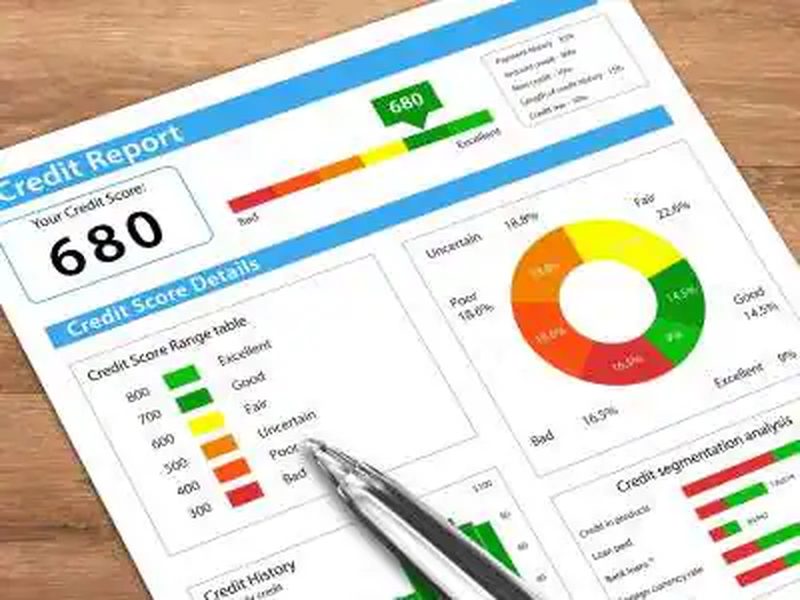
A three-digit number between 300 and 900 quietly shapes some of the biggest financial moments of your life: whether your home loan is approved, what interest rate you pay, even whether a landlord or employer trusts your financial discipline. That number is your CIBIL score — India’s most widely used credit score, computed by TransUnion CIBIL from your borrowing and repayment history. Understanding how your credit score is calculated, and how to improve it, is one of the highest-return financial skills you can learn, because a good score literally makes borrowed money cheaper.
What a credit score actually measures
A credit score is a statistical summary of how reliably you have handled credit in the past, used by lenders to predict how reliably you will handle it in the future. Every time you take a loan or credit card, the lender reports your account — the limit or sanctioned amount, the outstanding balance and, crucially, whether each month’s payment arrived on time — to credit bureaus. TransUnion CIBIL is the oldest and most referenced bureau in India; Equifax, Experian and CRIF High Mark maintain parallel scores on similar scales. Lenders typically pull your CIBIL report during underwriting, and most treat 750 and above as the threshold for a strong application, though each bank sets its own cut-offs by product.
How your CIBIL score is calculated
CIBIL does not publish an exact formula, but it discloses the factors and their approximate weights. Payment history carries the heaviest weight, around 30 per cent: a single 90-day delinquency can drag a good score down by 70 to 100 points, while years of on-time payments build it steadily. Credit utilisation — the share of your available limit you actually use — accounts for roughly 25 per cent; consistently maxing out cards signals stress even if you pay on time. The length and depth of your credit history, the mix of secured loans like home and car loans versus unsecured credit like personal loans and cards, and the number of recent hard enquiries when you apply for new credit make up the rest. Multiple loan applications in a short span suggest desperation to lenders and trim a few points with each enquiry.
- Payment history (~30%): on-time payments are the single biggest driver.
- Credit utilisation (~25%): keep usage well below 30 per cent of limits.
- Length of history: older accounts in good standing help; do not close your oldest card casually.
- Credit mix: a blend of secured and unsecured credit looks healthier than only unsecured borrowing.
- New enquiries: each loan or card application creates a hard enquiry; space them out.
How to check your score for free
You are entitled to one free full credit report from each bureau every year, and CIBIL also offers a free score check on its website with basic registration. Many banks and fintech apps now show your score free every month as an engagement feature. Checking your own score is a soft enquiry and never affects it — only lenders’ checks during applications count as hard enquiries. Review the report, not just the number: look for accounts you do not recognise, wrongly reported late payments and incorrect personal details, because errors are surprisingly common and you can raise disputes with the bureau to get them corrected.
How to improve your score, step by step
There are no shortcuts, but the path is straightforward. First, automate every EMI and card payment so nothing is ever late — set up auto-debit and keep a buffer in the account. Second, bring utilisation down: if you regularly cross 30 per cent of a card’s limit, ask for a limit increase or split spending across two cards rather than borrowing more. Third, clear small overdue amounts and then let time do the work; negative marks fade in influence as newer good behaviour accumulates, though serious defaults stay on the report for years. Fourth, avoid applying for multiple loans or cards at once, and avoid closing old cards with long clean histories. For someone with no credit history at all, a secured credit card issued against a fixed deposit, used lightly and paid in full each month, is the standard on-ramp — it builds a repayment record from scratch within a year or so.
Be wary of anyone promising to repair your score for a fee. No agency can remove accurate negative information; only the lender that reported it, or the bureau after a genuine dispute, can change the record. What paid services sell is usually just disciplined behaviour you can do yourself for free.
FAQs
What is a good CIBIL score? Most lenders consider 750 and above strong, 700 to 749 acceptable with possibly higher rates, and below 650 difficult for unsecured credit. There is no single official cut-off.
How long does it take to improve a score? Small gains appear within three to six months of consistent on-time payments and lower utilisation; recovering from a serious default typically takes one to three years.
Does checking my own score lower it? No. Self-checks are soft enquiries. Only applications for new credit generate hard enquiries that affect the score.
Your credit score is ultimately a reputation system for borrowed money, and like any reputation, it is built slowly through repeated reliability and damaged quickly by a single lapse. Pay on time, borrow well within your limits and give it time — the number takes care of itself, and cheaper loans follow.
Compiled by the Khabar 24h Editorial Desk from publicly available sources.

Khabar 24h Editorial Desk — our explainers are prepared by the Khabar 24h editorial team using AI-assisted research tools, and every piece is reviewed by a human editor before publishing. We do not claim original reporting: our work is turning complex topics into simple, accurate summaries. Spotted an error? Write to contact@khabar24h.com — our corrections policy aims for same-day review.
More from this author →