Japan’s Sanae Takaichi reshuffles her cabinet as the 2027 LDP race looms
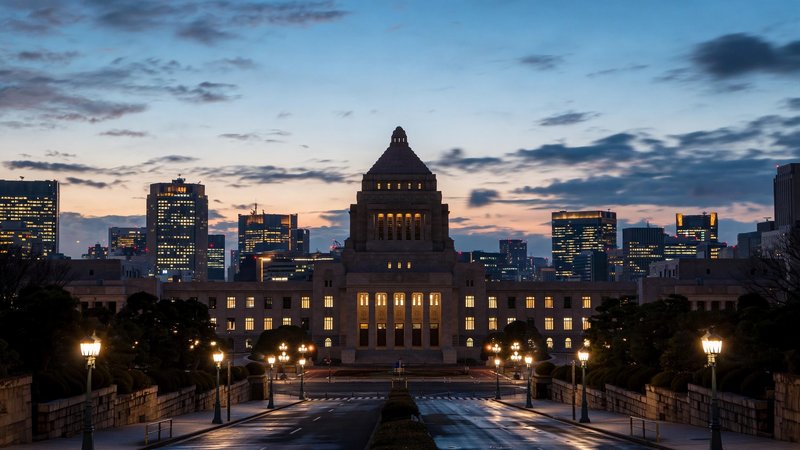
Japanese Prime Minister Sanae Takaichi has reshuffled both her ruling party’s leadership and her cabinet, completing the moves on 16 and 17 September 2026 in what analysts read as an early campaign for her re-election as Liberal Democratic Party president next autumn. The changes, the first since she became Japan’s leader in 2025, prioritise continuity: most of the senior figures who lost to her in last year’s LDP leadership race remain in post, while the junior coalition partner enters the cabinet for the first time.
How Japanese politics actually works
To understand a reshuffle, you need to understand the system it happens in. Japan is a parliamentary democracy where the prime minister is not directly elected by voters but chosen by the Diet — and in practice, by whoever controls the ruling party. Since 1955, that has almost always been the Liberal Democratic Party, which has governed Japan for all but a few brief intervals. The real election that decides the prime minister is therefore the LDP’s internal presidential race, voted on by party Diet members and rank-and-file members — which is why Takaichi’s eye is already on the autumn 2027 party poll rather than a general election.
This structure explains Japan’s famously revolving premierships: the country has had over a dozen prime ministers this century, most felled not by voters but by factional arithmetic, scandal or loss of internal party support. Cabinet reshuffles are the prime minister’s main tool for managing that arithmetic — distributing posts among factions and rivals to keep the coalition of internal backers intact. A reshuffle that “prioritises continuity,” as this one does, is a deliberate signal: the leader is buying stability from potential challengers by keeping them inside the tent.
What changed on 16 and 17 September
On Wednesday, Takaichi unveiled a reshuffled LDP executive team, retaining the three most powerful figures in the party — Vice President Taro Aso, 85, Secretary-General Shunichi Suzuki, 73, and Policy Research Council Chairman Takayuki Kobayashi, 51. Election Strategy Committee Chairman Yasutoshi Nishimura and Executive Acting Secretary-General Koichi Hagiuda also stayed on. The most notable change was parliamentary affairs chief, where 46-year-old former Deputy Chief Cabinet Secretary Hideki Murai replaced Hiroshi Kajiyama, 70, who moved to head the party’s decision-making General Council.
The cabinet reshuffle on Thursday followed the same logic. The scorecard:
- Retained: Chief Cabinet Secretary Minoru Kihara and Finance Minister Satsuki Katayama, along with two of Takaichi’s 2025 leadership rivals — Toshimitsu Motegi as foreign minister and Shinjiro Koizumi as defence minister.
- Replaced: Yoshimasa Hayashi, another leadership contender, was reportedly dropped as minister of internal affairs and communications, with Hisayuki Fujii, 55, reportedly entering the cabinet for the first time.
- New: Hiroshi Nakatsuka of Nippon Ishin no Kai (the Japan Innovation Party) became minister for regulatory reform — the junior coalition partner’s first cabinet seat, meaning it now shares formal responsibility for running the government.
The Ishin appointment is the most structurally significant move. The LDP has governed in coalition for decades — historically with the Komeito party — because it lost its outright majorities. Giving a junior partner its first cabinet seat binds that partner to the government’s record: shared power means shared responsibility when things go wrong. It is coalition management by co-option.
The road to the 2027 party poll
Takaichi’s position traces back to October 2025, when she won the LDP presidential election in a runoff against Koizumi, succeeding Shigeru Ishiba, who had resigned taking responsibility for the ruling coalition’s defeat in the July 2025 House of Councillors election — a loss that followed the coalition’s loss of its lower-house majority in October 2024. She became Japan’s first female prime minister, serving out a term as party president that runs until autumn 2027. Announcing the reshuffle, she said the changes would let the party and government “work together at full capacity to implement policies that make people feel affluent and secure.” The emphasis on retaining influential figures — including her former rivals — is widely seen as a strategy to consolidate the mainstream forces backing her administration and smooth her path to re-election in the 2027 leadership race, with the Aso faction, the LDP’s only remaining faction, and the former Abe faction both represented in key posts.
The faction detail matters. LDP factions — internal groupings that raise funds, endorse candidates and bargain over posts — were formally dissolved after the slush-fund scandal, with the Aso faction the notable survivor. Their persistence in all but name shows how hard the underlying structure is to dismantle: factions are how the LDP organises ambition, and ambition does not dissolve by decree.
The criticism from across the aisle
Not everyone reads the reshuffle as stability. Editorial criticism in the Japanese press called the reshuffle inward-looking, arguing it was designed with an eye on next autumn’s party poll rather than on addressing public distrust over the “money in politics” scandal — the faction slush-fund affair that has dogged the LDP. Two lawmakers involved in that scandal entered the cabinet for the first time; at a press conference, Takaichi defended the appointments on grounds of policy expertise and said the lawmakers had faced voters’ judgment in two House of Representatives elections, though the editorial argued doubts had not been dispelled. Opposition figures have similarly questioned whether keeping the same faces signals reform. With the 2027 LDP presidential election now the fixed horizon of Japanese politics, Takaichi’s reshuffled team will be judged both on the policies it delivers — from the cost of living to security — and on whether the continuity she has chosen reads to voters as steadiness or as a refusal to change.
What the government actually has to deliver
Behind the personnel chess lies a daunting policy in-tray. Japan faces the world’s oldest population and a shrinking workforce, persistent cost-of-living pressure despite the end of deflation, and the most ambitious military build-up in its post-war history — a doubling of defence spending aimed at countering regional threats, which must be funded without blowing out public debt already above 200 per cent of GDP. Energy policy, the weakness of the yen, and managing the alliance with the United States round out an agenda on which reshuffles buy time but not solutions. The 2027 verdict on Takaichi will ultimately rest less on who sits in which chair than on whether voters feel, in her words, “affluent and secure.”
FAQs
Why does Japan change prime ministers so often?
Because the prime minister serves at the pleasure of the ruling party’s internal politics. LDP presidents face re-election every three years, and factional shifts, scandals or election defeats routinely end premierships without voters going to the polls.
What was the LDP slush-fund scandal?
Factions were found to have failed to report hundreds of millions of yen in fundraising proceeds, funnelling unreported income to lawmakers — a scandal that forced the dissolution of most factions and has shadowed the party since.
Who is Sanae Takaichi?
A veteran conservative lawmaker and former economic security minister, she became Japan’s first female prime minister in October 2025 after winning the LDP presidential runoff.
Compiled by the Khabar 24h Editorial Desk from publicly available sources.

Khabar 24h Editorial Desk — our explainers are prepared by the Khabar 24h editorial team using AI-assisted research tools, and every piece is reviewed by a human editor before publishing. We do not claim original reporting: our work is turning complex topics into simple, accurate summaries. Spotted an error? Write to contact@khabar24h.com — our corrections policy aims for same-day review.
More from this author →
Leave a Reply