Nobel Chemistry 2026 Explained: The Homochirality Puzzle
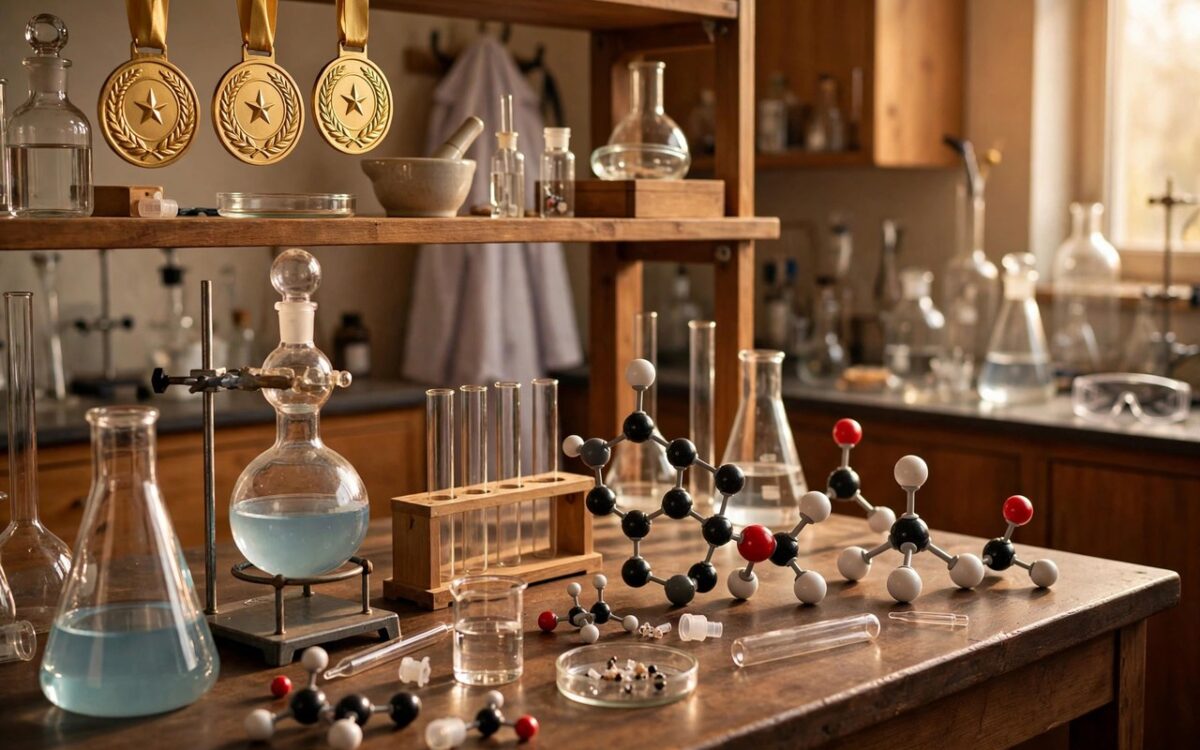
The 2026 Nobel Prize in Chemistry went to Henri B. Kagan and Kenso Soai for solving a century-old puzzle: why does life use only one mirror image of molecules?
Many molecules, like amino acids, come in two forms that are mirror images, called chiral pairs. Yet living things use almost exclusively one form. This one-handedness is called homochirality.
Kagan, of Université Paris-Sud in France, and Soai, 95, of Tokyo University of Science, discovered non-linear effects and autocatalysis in asymmetric synthesis. In plain terms, they found reactions where a tiny initial imbalance snowballs into a product of single handedness.
The famous "Soai reaction" can amplify a nearly invisible chiral trace into a fully one-handed product, offering a possible explanation for how life's single-handedness emerged.
The work also transformed drug manufacturing: in pharmaceuticals, often only one mirror image has the desired effect.
The Royal Swedish Academy of Sciences announced the prize on October 7 in Stockholm. The duo share 12 million Swedish kronor, about $1.2 million.
Related stories
View all →
Bitcoin’s $83,000 rebound explained
Why bitcoin bounced above $83,000: Trump's Iran statement, ETF outflows, and the key levels traders watch.

Starlink Mobile explained: SpaceX’s carrier play
How SpaceX's 800 MHz spectrum deal and 15,000 new satellites could turn Starlink Mobile into a US carrier.
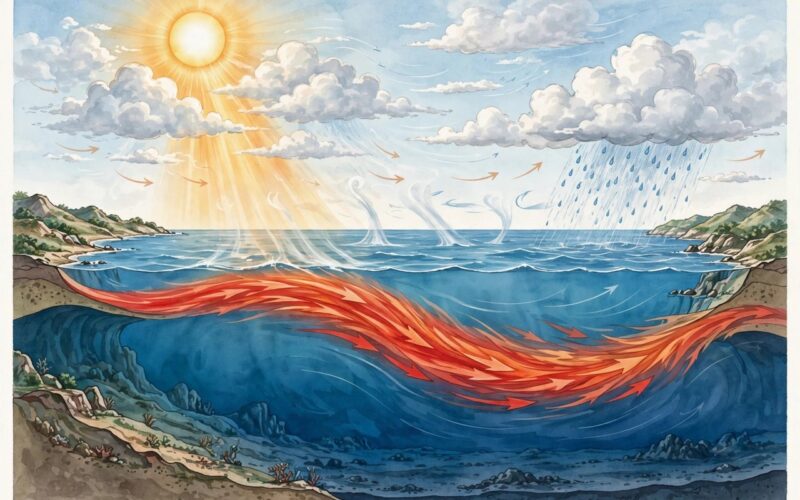
El Nino explained: why Maharashtra is parched
What El Nino is, how it weakens the monsoon, and why it left Maharashtra declaring drought in 265 talukas.

Khabar 24h Editorial Desk — our explainers are prepared by the Khabar 24h editorial team using AI-assisted research tools, and every piece is reviewed by a human editor before publishing. We do not claim original reporting: our work is turning complex topics into simple, accurate summaries. Spotted an error? Write to contact@khabar24h.com — our corrections policy aims for same-day review.
More from this author →
Leave a Reply