Regrowing Knee Cartilage: What the Stanford Study Found
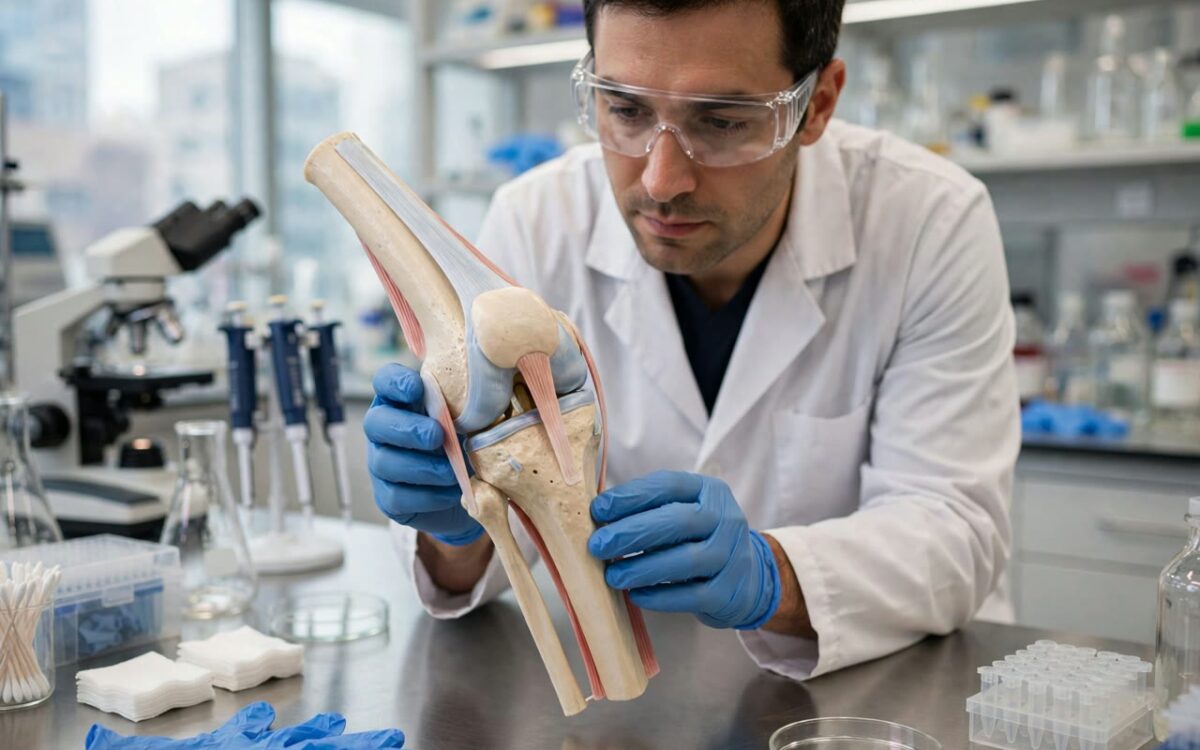
Stanford scientists have found a way to regrow worn-out knee cartilage in mice. The study, published in June in the journal Science, could one day end knee replacements. Here is what it means.
Cartilage is the smooth tissue that cushions joints. In osteoarthritis, it breaks down, causing pain and stiffness. The disease affects one in five American adults. No drug can slow or reverse it today. Treatment is painkillers, then joint replacement.
The Stanford team blocked a protein called 15-PGDH, which rises with age and switches off the body’s repair cells. In old mice, the treatment regrew lost knee cartilage. It also stopped arthritis after knee injuries like ACL tears.
Human knee tissue from replacement surgeries responded too. Samples began making new, working cartilage in the lab.
An oral version of the drug is already in trials for muscle weakness, which gives doctors early safety data. But cartilage trials in people have not started yet. Real treatments are years away.
Still, it is the first approach that targets the cause of osteoarthritis, not just the pain.
Related stories
View all →
Bitcoin’s $83,000 rebound explained
Why bitcoin bounced above $83,000: Trump's Iran statement, ETF outflows, and the key levels traders watch.

Starlink Mobile explained: SpaceX’s carrier play
How SpaceX's 800 MHz spectrum deal and 15,000 new satellites could turn Starlink Mobile into a US carrier.

El Nino explained: why Maharashtra is parched
What El Nino is, how it weakens the monsoon, and why it left Maharashtra declaring drought in 265 talukas.

Khabar 24h Editorial Desk — our explainers are prepared by the Khabar 24h editorial team using AI-assisted research tools, and every piece is reviewed by a human editor before publishing. We do not claim original reporting: our work is turning complex topics into simple, accurate summaries. Spotted an error? Write to contact@khabar24h.com — our corrections policy aims for same-day review.
More from this author →
Leave a Reply