The ‘phoenix planet’ explained: a world born after its star died
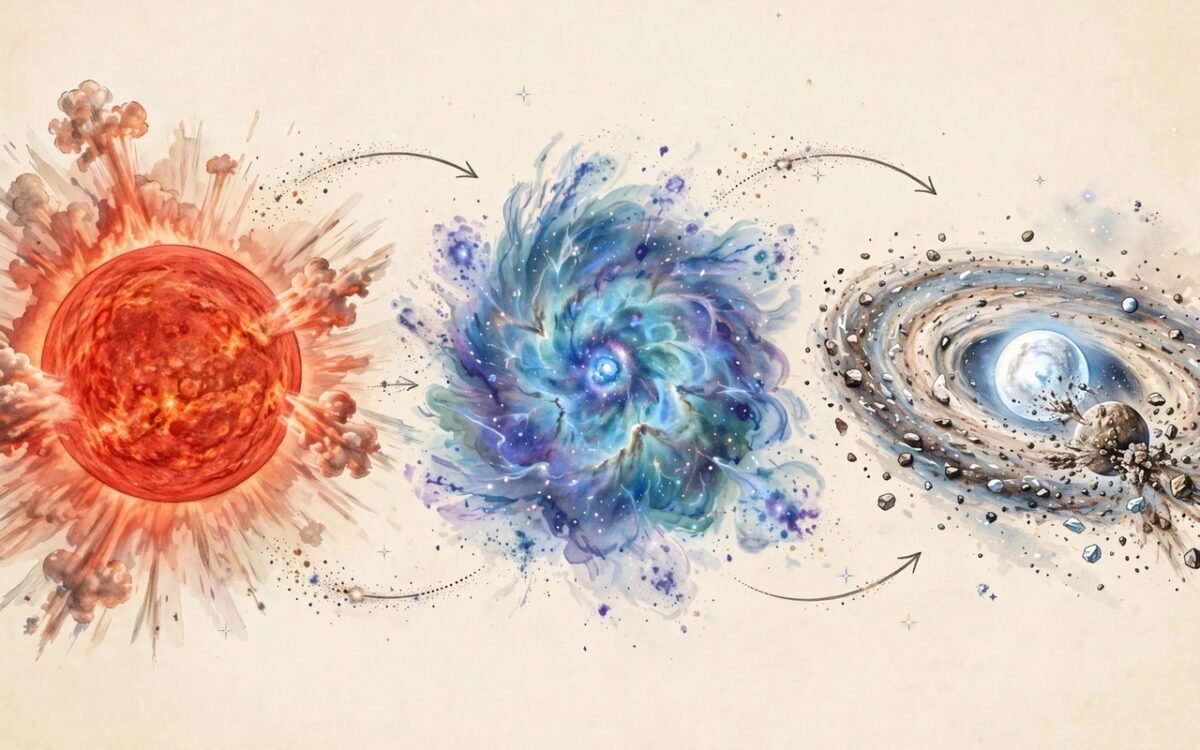
Scientists may have found the first “second-generation” planet: a world that formed from the debris of its dead host star. Here is what the discovery means.
When a sun-like star dies, it swells into a red giant, sheds its outer layers and collapses into a hot, dense white dwarf. Any close planets are usually destroyed. But astronomers found chemical traces on the white dwarf HS 0209+0832 suggesting a new gas giant condensed from the ejected material.
The smoking gun is niobium, a heavy element found for the first time on a white dwarf’s surface. Heavy elements sink fast in white dwarfs, so they must have arrived recently, likely stripped from a nearby planet’s atmosphere. A repeating 4.4-day signal in NASA’s TESS data fits a giant planet in a tight orbit.
Why it matters: more than 95 percent of stars will become white dwarfs. If second-generation planets are common, white dwarfs could host far more planets than thought, and our own sun might gain a new planet billions of years from now. The planet is still a candidate, awaiting confirmation from the James Webb Space Telescope.
Related stories
View all →
Bitcoin’s $83,000 rebound explained
Why bitcoin bounced above $83,000: Trump's Iran statement, ETF outflows, and the key levels traders watch.

Starlink Mobile explained: SpaceX’s carrier play
How SpaceX's 800 MHz spectrum deal and 15,000 new satellites could turn Starlink Mobile into a US carrier.

El Nino explained: why Maharashtra is parched
What El Nino is, how it weakens the monsoon, and why it left Maharashtra declaring drought in 265 talukas.

Khabar 24h Editorial Desk — our explainers are prepared by the Khabar 24h editorial team using AI-assisted research tools, and every piece is reviewed by a human editor before publishing. We do not claim original reporting: our work is turning complex topics into simple, accurate summaries. Spotted an error? Write to contact@khabar24h.com — our corrections policy aims for same-day review.
More from this author →
Leave a Reply