Nazi Germany’s atomic bomb programme explained: how far did it get?
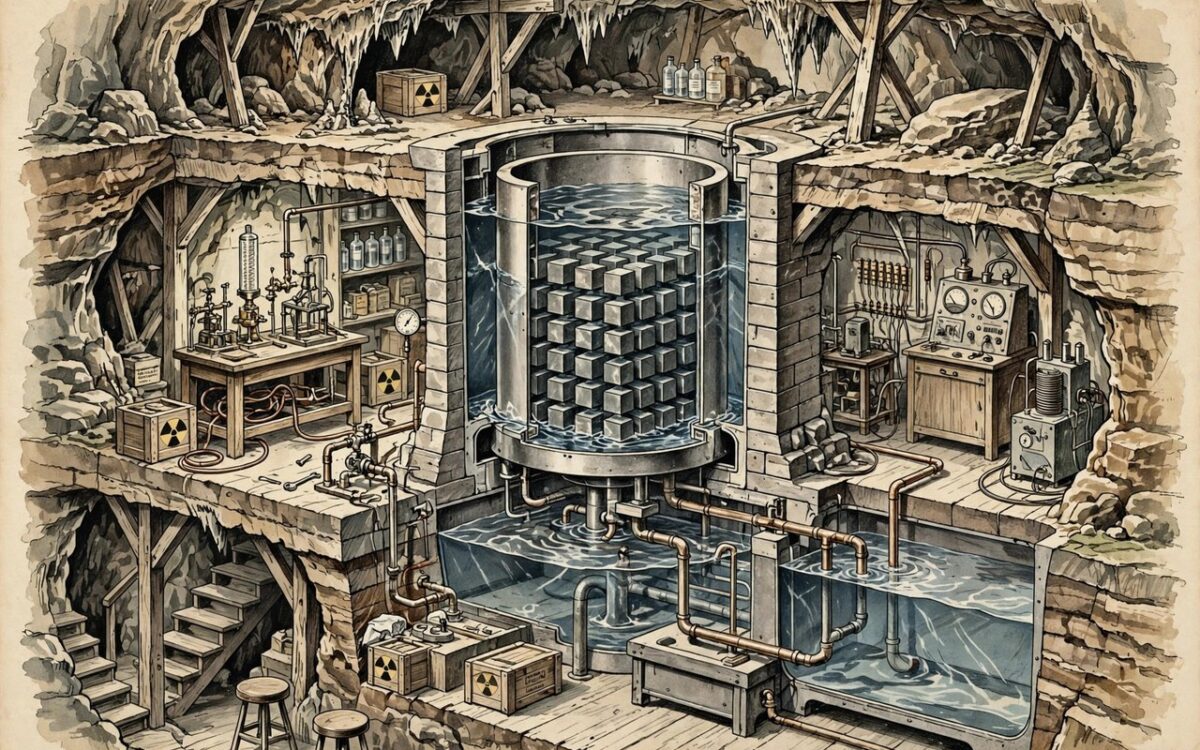
Scientists have rebuilt parts of Nazi Germany’s wartime nuclear reactor, and the results settle a long debate. The B8 pile was an experiment built in a cave at Haigerloch in 1945: 664 cubes of uranium suspended in heavy water, an attempt to start a chain reaction. It never worked, and Allied troops dismantled it in April 1945.
Now physicists have reconstructed it and published the findings in PNAS Nexus. Their conclusion: the design would have needed about twice as much uranium and well over twice the heavy water to sustain a reaction. Its multiplication factor reached only about 0.94, short of the 1.0 needed.
The team also confirmed that graphite could not have substituted for heavy water, as the Germans feared boron contamination. In short, Germany’s atomic bomb programme was further from success than some histories suggested. The study turns a wartime what-if into a measured answer.
Haigerloch’s cave laboratory is now a museum devoted to the history of atomic research.
Related stories
View all →
Bitcoin’s $83,000 rebound explained
Why bitcoin bounced above $83,000: Trump's Iran statement, ETF outflows, and the key levels traders watch.

Starlink Mobile explained: SpaceX’s carrier play
How SpaceX's 800 MHz spectrum deal and 15,000 new satellites could turn Starlink Mobile into a US carrier.

El Nino explained: why Maharashtra is parched
What El Nino is, how it weakens the monsoon, and why it left Maharashtra declaring drought in 265 talukas.

Khabar 24h Editorial Desk — our explainers are prepared by the Khabar 24h editorial team using AI-assisted research tools, and every piece is reviewed by a human editor before publishing. We do not claim original reporting: our work is turning complex topics into simple, accurate summaries. Spotted an error? Write to contact@khabar24h.com — our corrections policy aims for same-day review.
More from this author →
Leave a Reply