What space travel teaches us about sleep and body clocks
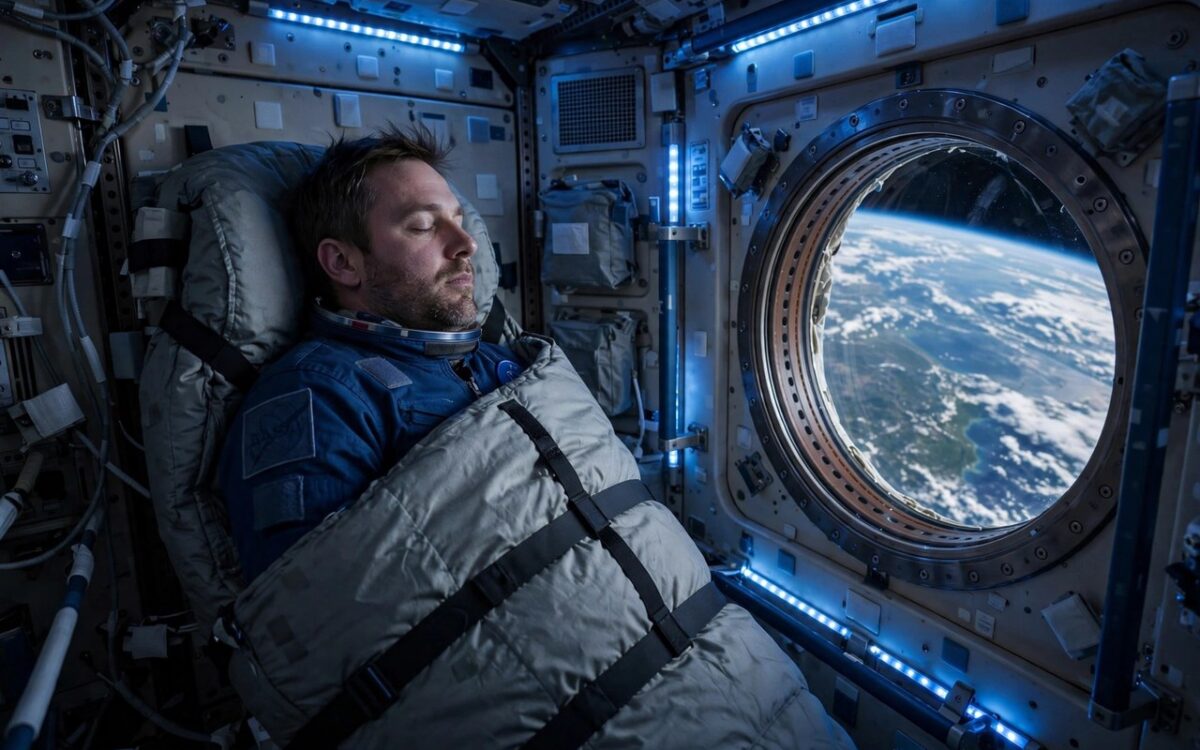
Space research is giving scientists an unusual window into human sleep, showing that sleep depends as much on timing as on tiredness. Astronauts on the ISS see 16 sunrises and sunsets a day, which can badly disrupt the sleep-wake cycle.
During NASA’s Artemis II lunar flyby in April 2026, crew members wore wrist-mounted sleep monitors before, during and after the mission. The data let researchers study how sleep, activity and cognition changed across training, deep-space flight and recovery.
NASA is also testing ways to prevent sleep disruption. One study played pink noise through a headband during daytime sleep to improve alertness. A 14-person trial found no difference in the first 40 minutes after waking.
Light is treated as biological life support in spacecraft. Blue-enriched white light supports alertness, while dimmer light prepares the brain for sleep. Caffeine helps alertness but interferes with the sleep needed the next day.
In late September, the four-person crew of NASA’s year-long Chapea Mars simulation switched to a 24-hour-40-minute Martian day. The mission ends October 31.

Khabar 24h Editorial Desk — our explainers are prepared by the Khabar 24h editorial team using AI-assisted research tools, and every piece is reviewed by a human editor before publishing. We do not claim original reporting: our work is turning complex topics into simple, accurate summaries. Spotted an error? Write to contact@khabar24h.com — our corrections policy aims for same-day review.
More from this author →
Leave a Reply